



The Intersection of Healthcare and Technology: Leveraging Technology to Address an Aging Population
Insights
The U.S. population age 65 or older grew from 55.8 million in 2020 to 64.6 million in 2025, accounting for approximately 19% of the total American population and continuing a steady rise driven by longer life expectancies and aging Baby Boomers, the oldest of whom are reaching age 80 this year. The share of the U.S. population age 65 and older is expected to increase to 23.4% by 2060, and the trend is global, with the share of the world population age 65 and older projected to nearly double from 10.5% to 19.6% between 2025 and 2060.1 This rapid increase in the older adult population is accompanied by a growing prevalence of chronic conditions, such as cardiovascular diseases, diabetes, cognitive decline and other geriatric syndromes, underscoring the urgent need for age-sensitive healthcare solutions.
At the same time, however, while the overall U.S. healthcare workforce is growing in total numbers, it faces a severe structural shortage relative to skyrocketing demand, creating, in turn, substantial strain on the healthcare industry. A 2025 federal analysis projected that by 2038, 30 out of 35 physician specialties will be hurting for practitioners, with over 140,000 roles left unfilled.2 And for nurses, that shortage is projected to be over 108,000.3 The availability of physician assistants, nurse practitioners, home care workers, assisted living aides and other caregivers is similarly insufficient to provide traditional services, heavily reliant on in-person, human-dependent interactions.
A variety of innovative artificial intelligence (AI) and digital technologies can help bridge healthcare workforce shortages and improve quality of life for the growing older adult population by improving access, safety and chronic disease management. Here are just some ways the intersection of healthcare and technology can both reduce pressure on facilities and staff and transform elderly care for the better—some of which are already being put into practice; some remain in the pilot or conceptual stage. All continue to evolve.
“In the Oak Associates Funds, we look to capitalize on the intersection of healthcare and technology by prioritizing investments in companies that provide targeted, proactive solutions integrating seamlessly into existing workflows rather than adding friction for administrators, providers or patients. We seek products and services intuitive for patients and providers willing to adopt emerging solutions.”
~ Robert Stimpson,
Chief Investment Officer and
Portfolio Manager of Oak Associates
Telehealth and Telemedicine. Virtual visits improve accessibility to healthcare by eliminating travel barriers, reducing exposure to illnesses and enabling seniors to consult practitioners, manage medications and maintain continuity of care remotely—at a reduced cost. Such technology facilitates care for many seniors but especially for those with mobility issues and/or in remote or underserved areas.
Wearables and Remote Patient Monitoring. Wearable sensors and connected smart devices are able to capture real-time vital signs, detect falls, track medication adherence and monitor chronic conditions like diabetes, hypertension, sleep apnea or heart failure, allowing healthcare providers to remotely, timely and dynamically adjust treatment plans without requiring clinic visits, thereby combating workforce shortages, costs and access gaps. This technology can also be used preventively, changing the event-based model of today, i.e., treating issues after they arise, by addressing concerns early, before they develop into a more serious condition requiring more attention, care and cost.
“As the landscape of digital health technologies and health informatics expands, we believe the intersection of technology and healthcare presents a pivotal opportunity for investors to participate in a rapidly transforming, dynamic industry offering immense potential to revolutionalize care delivery for an aging population. Advances in biotechnology, life sciences, medical devices, surgical procedures and pharmaceuticals, along with dramatic increases in the portion of U.S. GDP devoted to health care spending, are among the trends expected to spur the ongoing growth the sector-focused Oak Associates Funds seek to capture.”
~ Chuck Kiraly, President
AI-Assisted Patient Documentation and Diagnostics. Using AI tools in clinical documentation and to consolidate comprehensive electronic health records can reduce administrative workload for medical staff, allowing them to focus more on patient care and enhance coordination among care team members. In turn, resource utilization is optimized, transitions between healthcare settings are easier and the risks of medication errors, duplicative tests and unnecessary hospital readmissions are reduced.
AI can also be used to analyze large health databases to shift the paradigm from a one-size-fits-all approach to help increase the speed, accuracy and precision of diagnoses, predict medical risks, choose the best interventions, manage complex medication schedules and offer more proactive, customized care tailored to the differentiated genetic makeup, medical history and preferences of older adults.
“While innovations and advances at the intersection of technology and healthcare hold much promise, identifying key companies well positioned for success presents a challenge. At Oak Associates, we pay particular attention to company
fundamentals, such as valuation, earnings growth potential, competitive advantage and quality of management. We are especially looking for technology able to deliver tangible financial benefits and/or improve clinical outcomes.”
~ Jeff Travis, Portfolio Manager
Robotics. In surgery, robots can be used to increase the speed and precision of procedures. For hospital logistics, robots may be used to improve operational efficiency and address staffing challenges by moving supplies, such as medications, specimens and linens, and automating select pharmacy, laboratory, sanitation and inventory tasks. At home or in facilities, robots can bolster cognitive stimulation and physical mobility support and even cushion social isolation through emotionally interactive companionship.
Smart Home Sensors. Bed sensors, motion detectors, automated pill dispensers, voice-activated controls and emergency alerts can help seniors live more independently and reduce caregiver burden, as aging in place grows in popularity.
Administrative and Supply Management Automation. Automation of administrative tasks, such as call-center triage, scheduling and revenue-cycle management, can help keep clinicians focused on patient care. Further, predictive systems applied to pharmaceutical and equipment supply management can more accurately estimate drug and equipment needs, reducing waste and stock-outs, improving warehouse management and bettering bottom-line expense outlays.
***
There do remain challenges in leveraging modern technology to address the complex healthcare needs of an aging population. These include digital literacy barriers, socioeconomic and geographic access and adoption gaps, design inefficiencies, data privacy concerns, cost tensions, insurance coverage, workforce upskilling needs and systemic ageism. But a transformed future of the healthcare sector is already underway, with cutting-edge, advanced technologies offering promising avenues to improved patient outcomes and reshaping healthcare delivery by a leaner, more efficient, more patient-centric workforce. Importantly, technology revolutions in healthcare are valuable but need to be used wisely, not replacing in-person visits and meaningful human interactions often crucial to diagnosis and care but rather serving as balance, support, complement and enhancement to elderly care. As the maturity and real-world integration of health-related technologies vary considerably but remain early overall, the opportunity to take advantage of this dynamic field through strategic, focused investment is well worth considering.
In the Oak Associates Funds, we look to capitalize on the intersection of healthcare and technology by prioritizing solutions that integrate seamlessly into existing workflows rather than adding friction for administrators, providers, or patients. We are looking for technology that should be able to deliver either tangible financial benefits or improve clinical outcomes. The application should be intuitive because even the most advanced products can fail, if patients or healthcare workers choose not to adopt the products due to difficulty of use. Oak has specialized in U.S. equity investing for more than 40 years based on an investment philosophy centered on the core tenets of investing for the long term, concentrating in our best ideas and remaining fully invested.
1 U.S. Census Bureau, August 31, 2026
2 HRSA Physician Workforce: Projections, December 2025
3 American Association of Colleges of Nursing, August 2026
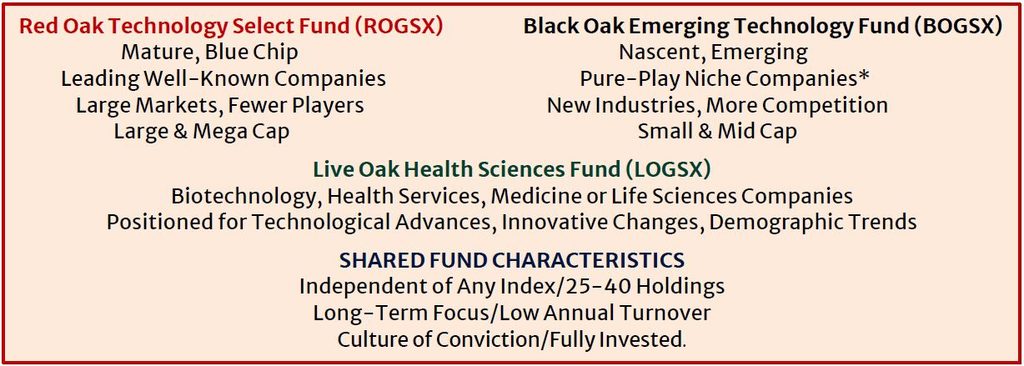
*Pure-Play Niche Companies: Companies that tend to focus more on a single industry that are closely tied to their industry’s performance.
These companies can provide higher risk and reward potential as they may be more susceptible to industry-specific downturns.
For more mutual fund information, call today: 1-888-462-5386 or visit our website at www.oakfunds.com
Past performance is no guarantee of future results. Oak Associates Funds are available to U.S. investors only. The thoughts and opinions expressed in the article are solely those of the author as of March 11, 2026. The referenced indices are for illustrative general market comparisons only and not meant to represent performance of any fund. Investors cannot invest directly in an index.
To determine if the Oak Associates Funds are an appropriate investment for you, carefully consider each Fund’s investment objectives, risk factors and charges and expenses before investing. This and other information can be found in the Funds’ prospectus, which may be obtained from your investment representative or by calling 888.462.5386. Please read it carefully before you invest or send money.
Important Risk Information: Mutual fund investing involves risk, including the possible loss of principal. Funds that emphasize investments in technology generally will experience greater price volatility. There are additional risks associated with investing in a single-sector fund, including greater sensitivity to economic, political, or regulatory developments impacting the sector. Information Technology companies face competition and potentially rapid product obsolescence.
Oak Associates Funds are distributed by Ultimus Fund Distributors, LLC (Member FINRA). Ultimus Fund Distributors, LLC and Oak Associates Funds are separate and unaffiliated.
20261106-6069528
More News & Insights